In this ultimate guide to running a food truck, you’ll learn everything you need to know about planning and operations. From choosing the right food truck to legal requirements and effective marketing strategies—we’ll give you valuable tips on how to reach your target audience and build a successful street food business. Pay special attention to the quality of your ingredients and an appealing menu to keep your customers coming back.
Are you ready to dive into the exciting world of food trucks and make your culinary dream a reality? In this ultimate guide, you’ll learn everything you need to know to successfully plan and operate your food truck. From choosing the right size and equipment to legal requirements and effective marketing strategies—we’ll give you valuable tips to help you reach your target audience and make your offerings shine. Read on and discover how you can use your food truck not only to serve delicious food but also to build a thriving business!
Choosing the right food truck
The size of your food truck plays a crucial role in your planning. When choosing the right size, you should consider various factors that significantly impact the operation of your food truck. First and foremost, it’s important to think about how many dishes you want to prepare at the same time. If you want to offer an extensive menu with a variety of dishes, you’ll need more space to accommodate all the necessary kitchen equipment while ensuring smooth operations. The capacity for ingredients shouldn’t be underestimated either. A larger truck allows you to store more supplies, which is particularly advantageous at events with high customer traffic.
Size and capacity
Choosing the right size also depends on your planned location. If you often want to be present in busy locations or at large events, a spacious food truck is an advantage. It not only offers space for your kitchen equipment, but also for an appealing sales area that attracts customers. Also think about how many employees you want to plan for. A larger truck offers more space for your team, which can increase efficiency.
Features and functionality:
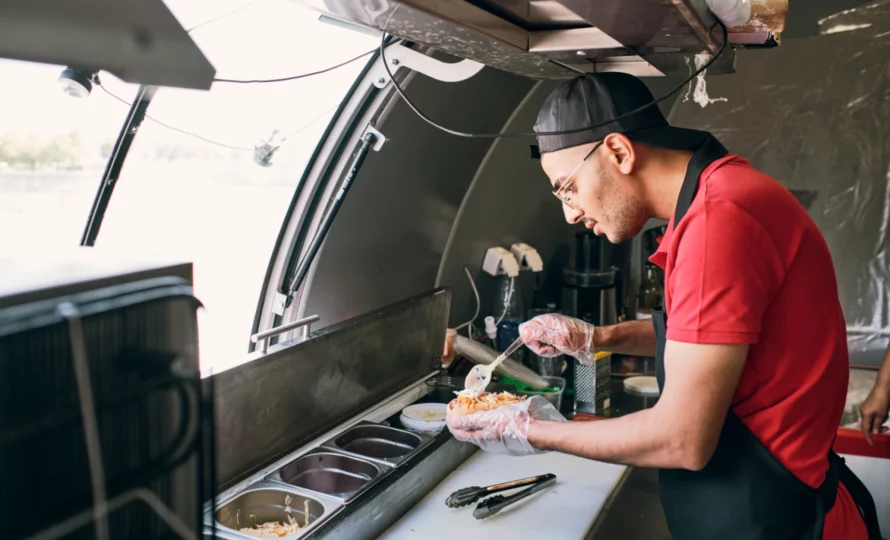
The equipment in your food truck directly affects your efficiency. To ensure you can work quickly and effectively, certain kitchen appliances are essential. These include grills, fryers, and refrigerators, among others. Make sure the equipment is both functional and high-quality to ensure consistent food quality. The layout of the equipment is also crucial: it should be designed so that you can work without unnecessary detours. Ergonomic furniture and sufficient storage space for utensils and ingredients are also important to guarantee a smooth workflow.
Design and Branding:
Your food truck’s design should reflect your brand. Appealing and consistent branding not only attracts the attention of potential customers but also builds brand recognition. Come up with a creative concept for your truck’s exterior—from colors to logos and lettering. A well-designed food truck can leave a lasting impression and help keep customers coming back. Remember that the design must also be functional: it should provide enough space to present your menu in an appealing way without disrupting kitchen operations.
Choosing the right food truck is therefore a complex decision that requires careful consideration. Size, equipment, and design play a key role in the future success of your business. However, to truly succeed in the food truck business, you must also keep an eye on legal requirements and permits.
Legal requirements and approvals
Compliance with legal regulations is essential for every food truck operator. If you want to run your food truck successfully, it’s important to obtain all necessary permits and follow the applicable regulations. In this section, you’ll learn about the legal requirements you need to follow to stay on the right side of the law and avoid potential problems.
Business Registration:
Before you get started with your food truck, you need a business registration. This registration is the first step in officially registering your business. You can usually register at your local trade office. There you specify what type of business you want to run. Make sure you have all the necessary documents to hand, such as your identity card and possibly proof of your qualifications in the catering sector. The fees for business registration vary depending on the city, but are generally manageable.
Health regulations:
Health regulations are a key aspect of running a food truck. These regulations are designed to protect your customers and ensure that the food you serve is prepared hygienically. You must familiarize yourself with the specific requirements of food safety laws. This includes, among other things, complying with hygiene regulations in the kitchen and providing regular training for you and your employees on topics such as food safety and hygiene. It is also advisable to apply for a health certificate confirming that you possess the necessary knowledge regarding the safe handling of food.
Permits for operation
In addition to the business registration and health regulations, you may need other permits to operate your food truck legally. This often includes a special use permit if you plan to set up your truck in public places or at events. Find out about the specific requirements in your region from your local authority. It may also be necessary to obtain special permits when catering for events. It is important that you adhere to all deadlines and submit the applications on time.
Insurance:
Another important point is the insurance for your food truck. You should definitely take out liability insurance to protect yourself against possible claims for damages. This insurance protects you if someone is injured by your food or the operation of your truck. Business interruption insurance can also be useful to cover financial losses if your food truck is unable to operate due to unforeseen events.
Tax considerations:
As a business owner, you also need to deal with tax requirements. This includes registering with the tax office and filing tax returns on a regular basis. Learn about the various types of taxes that may apply to your business, such as sales tax and business tax. It can be helpful to consult a tax advisor to ensure that you comply with all legal requirements and don’t miss any deadlines.

Local regulations
Depending on where you operate your food truck, additional local regulations may apply. These can vary from city to city and often concern aspects such as noise protection or parking your truck in certain places. It is advisable to find out about the specific regulations in your region in advance and contact the relevant authorities if necessary.
The legal requirements and permits are therefore an essential part of running a food truck. They not only ensure that you are legally protected, but also help you to gain the trust of your customers and make a professional impression. If you pay careful attention to these points, you will lay the foundations for a successful street food business.
However, to be really successful in the food truck business, you also need to choose the ideal location and address your target group effectively.
Choice of location and target group
The location of your food truck can make the difference between success and failure. Choosing the right location is crucial to effectively reach your target group and ensure high customer frequency. First of all, you should think about where your potential customers spend their time. Busy places such as city centers, pedestrian zones or events with high visitor numbers are ideal. Here you have the opportunity to reach many people and make your offer known.
A thorough market analysis is essential. Explore the area in which you want to place your food truck. What other providers already exist? Is there competition in the form of other food trucks or restaurants? While a certain amount of competition can be positive as it shows that there is demand, you should make sure that you don't get lost in a crowded market. Think about how you can stand out from other providers. Perhaps you have a unique concept or special dishes that are only available at your restaurant.
Another important factor is the accessibility of the location. Is the location easy to reach and clearly visible? A food truck that is hidden or difficult to access will attract fewer customers. Make sure that there is enough parking space for your customers and that they can get to your truck easily. Infrastructure also plays a role: are there power connections or water sources nearby? These aspects are important for the operation of your food truck and should not be neglected when choosing a location.
The target group is another key point that you should consider. Who are the people you want to address? Are they students on their way to university, professionals on their lunch break or families on an excursion? The more precisely you define your target group, the better you can tailor your offer to them. Also think about which food and drinks are particularly popular with this target group. For example, if you attract a lot of young people, creative burger creations or vegan options could go down well.
To find the best location for your food truck, it can be helpful to try out different places. You could stand in different places on different days and at different times and see where you get the most sales. This flexibility allows you to adapt your approach and find out where your food truck works best.
You should also take seasonal factors into account. During the summer months, festivals and outdoor events attract large crowds, while in winter, other venues—such as Christmas markets—may be more suitable. Keep an eye out for local events and markets where you can set up your food truck. This not only offers a great opportunity to boost sales but also to increase brand awareness.
Choosing a location is therefore a complex process that requires careful consideration. Once you have found the ideal location and know exactly who your target audience is, you are well on your way to success with your food truck. However, in order to be truly visible and effectively target your customers, a well thought-out marketing concept is crucial for the visibility of your food truck.
Marketing strategies for your food truck
A well thought-out marketing concept is crucial for the visibility of your food truck. In today's world, where competition in the street food sector is constantly growing, it is essential that you stand out with creative and effective marketing strategies. The first step is to accurately define your target audience and understand where and how you can best reach them. Various channels play a role here, from social media to local events.
Using social media:
Using social media is one of the most effective ways to promote your food truck. Platforms like Instagram and Facebook give you the opportunity to showcase your food in an appealing way and connect with potential customers. Create an engaging profile that reflects your brand and what you offer. Regularly share photos of your best dishes, behind-the-scenes glimpses of your daily work, or special events you’re participating in. Use hashtags like #Streetfood and #Foodtruck to increase your reach and attract new followers. Actively engage with your followers, respond to comments, and encourage them to share their experiences with your food truck. This not only fosters customer loyalty but also ensures organic growth for your brand.
Local events and markets
Another important aspect of your marketing strategy is participating in local events and markets. These opportunities not only give you the chance to offer your food to a wide audience, but also to make direct contact with your customers. Find out about upcoming festivals, fairs or weekly markets in your area and register in good time. Consider planning special offers or promotions for these events to attract more customers. Perhaps you can create a special dish that is only available during these events. Such promotions not only create a buzz, but also promote word of mouth.
Form partnerships:
Collaboration with other local businesses can also be an effective marketing strategy. Consider collaborations with nearby businesses or venues. For example, you could offer a joint discount or collaborate on an event. Such partnerships not only expand your reach, but also create added value for your customers. For example, if you work with a local drinks supplier, you could offer a food and drink combo deal - this is sure to attract many customers.
The Importance of Customer Reviews:
Customer reviews are another key component of your marketing strategy. Positive reviews on platforms like Google or Yelp can be crucial in shaping new customers’ first impressions. Actively encourage your satisfied customers to leave a review. You can do this by offering small incentives, such as a discount on their next purchase or a free drink with their next order. Be sure to respond to reviews—both positive and negative—to show that you value your customers’ opinions.
Email marketing is an often underestimated strategy in the food truck sector. Create a mailing list and offer your customers the opportunity to sign up for regular updates. Inform them about new dishes, upcoming events or special offers. Emails are a direct form of communication and allow you to target your most loyal customers.
Strengthen visual identity:
Make sure that your food truck has a consistent visual appearance. From your logo to the colors of the truck to the menu cards, everything should fit together harmoniously and reflect your brand. An appealing design not only attracts the attention of potential customers, but also leaves a lasting impression.
Implementing these marketing strategies will help you to successfully position your food truck and build a loyal customer base. With the right measures, you can not only gain more visibility, but also increase interest in your offer and ultimately increase sales. If you take these points into account and continuously work on your presence, you will lay the foundation for a flourishing street food business.
However, to ensure that your offer is always of the highest quality and is well received by customers, you should also carefully plan the quality of the ingredients and the food on offer.
Quality of ingredients and range of dishes
The quality of your ingredients has a direct impact on the taste of your food. If you want to be successful in the food truck industry, it is essential to focus on fresh and high-quality products. Customers not only appreciate the taste, but also the origin and preparation of their food. Start by finding suppliers that offer high-quality ingredients and ideally come from the region. This not only supports the local economy, but also appeals to environmentally conscious customers who value sustainability.
Seasonality is an important aspect when choosing your ingredients. Seasonal produce is not only fresher, it is often cheaper and tastes more intense. Think about which dishes you want to offer and adapt your menu according to the seasons. In summer, light salads and refreshing drinks could take center stage, while hearty dishes such as stews or warm snacks go down well in winter. By using seasonal ingredients, you can also regularly renew your offer and surprise your customers again and again.
In addition to the quality of the ingredients, the menu also plays a crucial role. Think about which dishes are particularly well-suited for your food truck. Burgers, for example, are a classic in the street food scene and are very popular. You can offer a variety of options—from classic beef burgers to vegan alternatives and creative combinations with special sauces and toppings. Make sure your food not only looks delicious but is also easy to eat—after all, many customers are on the go.
Another important point is the diversity of your menu. Offer a selection of dishes that cater to different tastes and diets. In addition to meat-based options, vegetarian and vegan dishes should not be missing. This opens the door to a wider target group and shows that you take the needs of your customers seriously. You could even create special offers for certain events or holidays to increase interest.
The presentation of your food is also very important. Make sure that your food truck has an attractive and clean presentation. Use high-quality packaging and make sure that everything is well organized. An attractive appearance can make all the difference and make customers more likely to buy from you. Remember that the eye eats with you - nice photos of your dishes on social media can also help to attract more customers.
To keep the quality of your food consistently high, you should carry out regular quality checks. Check your ingredients for freshness and taste and ensure that all hygiene regulations are adhered to. Training for you and your team is important to ensure that all employees follow the same high standards. This not only contributes to your customers' satisfaction, but also protects your brand from potential negative reviews.
To summarize, choosing the right ingredients and a well-thought-out menu are crucial to the success of your food truck. High-quality products combined with a varied menu will delight your customers and keep them coming back for more.
Conclusion:
Planning and running a food truck is an exciting journey full of opportunities and challenges that allow you to share your passion for good food with others. To summarize, planning a food truck involves many aspects that need to be carefully thought through in order to be successful. From choosing the right food truck, where size, equipment and design are crucial, to the legal requirements that you must adhere to in order to be legally protected - every step is important. The choice of location also plays a key role: an ideal spot can make the difference between a thriving business and a failure. You should always be aware of who your target audience is and what marketing strategies you can use to target them effectively. Using social media, participating in local events and collaborating with other businesses are just some of the ways you can publicize your food truck. In addition, the quality of the ingredients and the food on offer is of paramount importance; fresh and high-quality products and a varied menu are key to customer satisfaction and keeping your guests coming back. If you keep all these aspects in mind and continuously work on your concept, you will lay the foundation for a successful street food business. Want to find out more about setting up a food truck? Then take a look at this article on opening a food truck to delve even deeper into the subject. Get inspired and start your own adventure in the world of food trucks - there's nothing better than making people happy with delicious food!