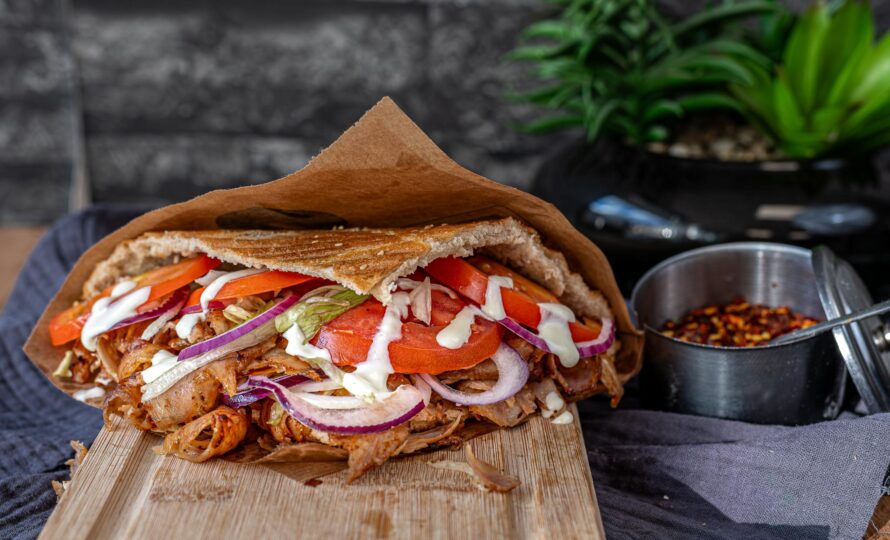
The döner kebab has beenone of themost popular fast-food dishes in Germany for decades. Originally introduced as a street food concept from Turkey, the döner has evolved into a culinary phenomenon in its own right in Germany. Today, it stands forvariety, freshness, and, increasingly, healthy ingredients and innovative variations.
While lamb and veal were traditionally the main ingredients in classic doner kebabs, the range of meats used has expanded to include turkey and meatless alternatives such as falafel . The side dishes, bread varieties, and sauces have also evolved. Trends for 2025 show that consumers want more choice, higher -quality food, and a more mindful approach to ingredients.
Traditional ingredients: Lamb, veal and turkey meat
The traditional basis of a doner kebab has long been lamb, often marinated with spices such as cumin, paprika and garlic. Lamb meat impresses with its strong flavor and juicy texture - for many, it is the "real" original recipe.
Veal became popular because it is milder and particularly suitable for tender, delicately seasoned kebabs. In Germany, veal is often combined with beef to provide a balanced source of protein.
Turkey meat is the lower-fat variant - popular with figure-conscious customers. It cooks faster, tastes light and can be found in many modern varieties.
Each type of meat has its own distinct flavors and textures—which in turn influence the entire preparation process and the taste of the dish.
Falafel & vegetarian kebab - enjoyment without meat
Vegetarian kebabs have been added to the range for years - often based on falafel. The deep-fried balls made from chickpeas and herbs are not only rich in protein, but also a tasty alternative to the classic meat kebab.

Other vegan fillings such as fried eggplants, marinated tofu and grilled vegetables are also on trend. The demand for plant-based options is constantly increasing - not least due to health aspects and sustainability awareness.
Bread variety: Pide, Dürüm and modern variations
It's not just the filling that makes the kebab - the bread is also crucial. In addition to the classic kebab pocket made from flatbread, there are numerous variations:
-
Pide: Airy, often toasted bread with sesame seeds - traditional and filling.
-
Dürüm: Thin flatbread, rolled like a wrap - practical for on the go.
-
Low-carb or wholemeal versions: For health-conscious customers.
Innovative providers are also experimenting with gluten-free breads or even lettuce wraps as a bread substitute - ideal for the modern street food scene.
Vegetables, salad, and sauces—the perfect combination.
The secret to a great döner lies in the balance of its ingredients. Fresh vegetables like tomatoes, cucumbers, red cabbage, and onions add seasonal flavor and texture. Depending on the season, grilled squash, asparagus, or beets can also be included.
Three classics dominate the sauces:
-
Yoghurt sauce: Mild, refreshing, often with garlic.
-
Herb sauce: With parsley, dill and mint.
-
Hot sauce: Based on chili or harissa - for those who like it spicier.
The combination of sauces, salad, meat and bread makes the kebab a fully-fledged, customizable dish.
Quality, trend and taste: what makes a good kebab in 2025?
In 2025, food quality will play a decisive role alongside taste. Customers will pay attention to origin, sustainability and preparation.
A good kebab...
-
uses fresh, seasonal and regional ingredients,
-
offers meat from species-appropriate husbandry or organic quality,
-
dispenses with additives and industrial mass-produced goods,
-
offers plant-based alternatives and calorie awareness,
-
communicates openly about origin and processing - keyword transparency.
Build-your-own concepts, where customers can put together their own kebab, are also becoming increasingly popular - a strong impetus for customer loyalty and individuality.
Conclusion: variety and innovation in kebab ingredients
The Döner 2025 is much more than just a quick snack: it is a symbol of variety, innovation and the combination of tradition and modernity. Whether with lamb, veal or turkey, with falafel, in pide or dürüm, with classic or vegan sauce - there is something to suit every taste and requirement.
Thanks to creative combinations, high quality and a conscious choice of ingredients, the kebab will remain an integral part of German street food culture in the future.