
By 2025, sustainability will no longer be a side issue but a key factor for success in the mobile food service industry. Customers at food trucks increasingly valueclimate-friendly concepts, eco-friendly packaging, and the use of local ingredients. The new generation of street food lovers is looking for authenticity, transparency, and responsibility—and food trucks that offer innovative ideas can clearly position themselves in this market.
Environmentally friendly packaging: Reusable, bioplastics & new ideas
Disposable packaging has fallen into disrepute - too much waste, too little recycling. That's why more and more food trailers are turning to sustainable alternatives:
-
Reusable deposit systems such as Relevo or Vytal are becoming the standard.
-
Biodegradable packaging made from sugar cane, palm leaf or bioplastics is ideal for climate-friendly street food offerings.
-
Innovative providers are working on edible packaging or recyclable modules for digital food trucks with integrated waste management.
Real-world example: The Berlin-based food truck “Leaf & Ladle” serves its bowls exclusively in reusable containers—thanks to app integration, the return rate exceeds 90%. This not only reduces waste but also strengthens customer loyalty.
Local ingredients & regional foods: Freshness, community, and trust.
Shopping regionally in 2025 is in tune with the times. Seasonal products, organic ingredients and partnerships with local businesses ensure trust, freshness and an honest story - a real marketing advantage.
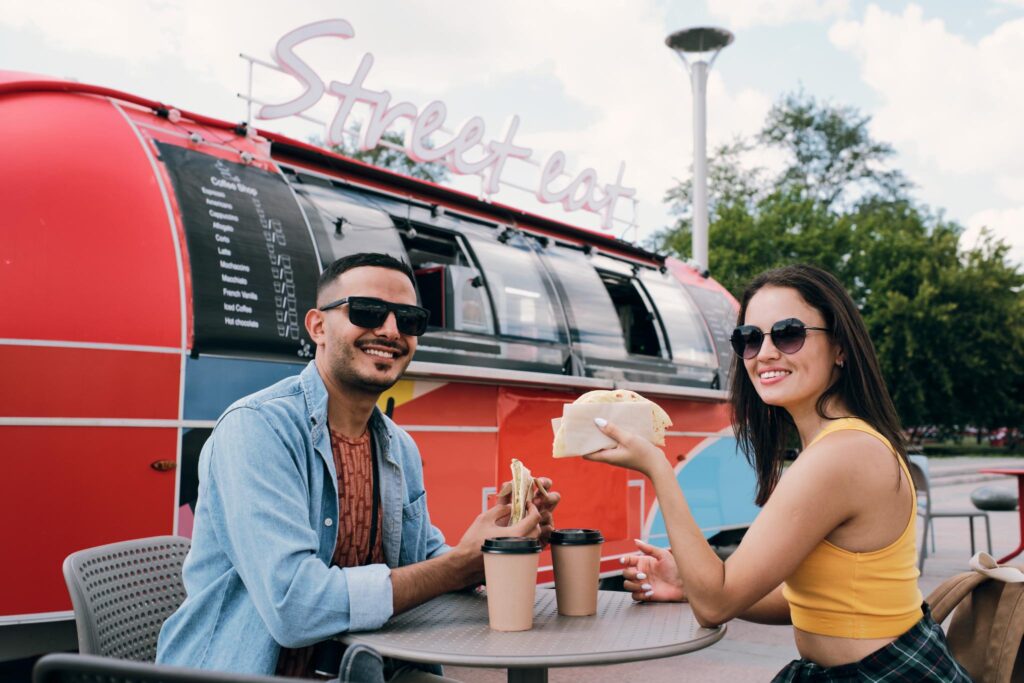
Regional food also means short delivery routes and less CO₂. This strengthens the community and makes your food trailer credible. Many businesses now label the origin and producers directly on the menu or via QR codes on the trailer.
Example: "Truck & Root" from Cologne works with a regional organic vegetable box. The weekly changing menu is based on the seasonal harvests. This creates trust, is appealing and stands out from the standard menu.
Zero Waste and plant-based cuisine as drivers of innovation:
Zero waste and plant-based cuisine are more than just trends in the food trailer scene - they are pure gastro innovation. Leftovers are used creatively, peelings are turned into potato chips, leftover bread into croutons. Thinking this way saves costs, delights customers and conserves resources.
Plant-based menus score points for sustainability, variety and a clear attitude. In 2025, many guests will expect plant-based alternatives as a minimum standard - whether for ethical, health or environmental reasons.
Customer loyalty through transparency and authenticity
Sustainability only works if it is honest. Customers want transparency: Where do the ingredients come from? How are they produced? Is the concept well thought out?
Show what you do - on Instagram, via posters or with short videos. Authenticity creates customer loyalty. Use storytelling to make your philosophy visible.
Tip: Integrate your sustainability measures into digital tools - e.g. via the website or a digital food truck monitor. This strengthens your community and ensures recognition value.
Practical examples of climate-friendly food trailers
-
"Green Tasty" (Munich): Focuses on regional organic products, offers exclusively vegan dishes and uses its own solar panel system for energy supply.
-
"MampfMobil" (Leipzig): cooperates with a local farmers' network, dispenses with packaging and passes on all leftovers to a neighboring urban farming project.
These food trucks show: Sustainability doesn't have to be expensive or complicated - it just requires creativity, planning and the courage to break new ground.
Recommendations for operators of
-
Analyze and convert packaging: Check your current packaging for compostability and reusability.
-
Check out suppliers: Search specifically for local food sources and organic producers in your area.
-
Plan your menu seasonally: Use seasonal produce for flexible, sustainable menus.
-
Implement zero waste: Introduce leftover management, use everything - from vegetable cuttings to leftover bread.
-
Strengthen communication: Tell your story, be honest and share it with your customers - online and offline.
Sustainability in the world of food trailers in 2025 is not a goal, but a path. Those who visibly follow this path not only gain the trust of their guests, but also position themselves as pioneers of a new, conscious street food culture.