Magazin
Blog

- General, Food Truck
Anyone looking to buy a food trailer or a sales trailer today is quickly faced with a flood of options—cheap imports, ready-made standard models, and colorful promises. But when it comes to choosing between a trailer, […]
- General, Food Truck
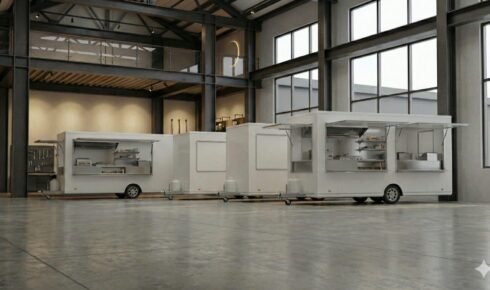
Which food trailer size for which purpose? Which food trailer size for which purpose? –Magazin L, XL, XXL, and XXXL.:::::. Choosing the right food trailer is one of the most important […]

- General, Food Truck
How to Launch a Signature Truck with an Iconic Product: A food truck is more than just a vehicle with a kitchen.It’s a stage, a workbench, and a business card all in one. And this is often where it’s decided whether your food truck concept will succeed in the long run or whether you’ll get lost in the daily grind. Many start with a good idea—and then lose their way […]

- General, Food Truck
An honest guide for entrepreneurs, restaurateurs, and career changers: Mobile food service is booming. Food trucks can be found at street food festivals, farmers’ markets, company courtyards, and weddings. At the same time, we hear in practice […]

- General, Food Truck, Food Service
By 2025, sustainability will no longer be a side issue but a key factor for success in the mobile food service industry. Customers are increasingly valuing climate-friendly concepts, eco-friendly packaging, and the use of local ingredients at food trucks. The new […]

- General, Food Truck, Food Service
Introduction:—What-is-a-food-trailer?—A food trailer is no longer just a mobile food truck—it’s a highlight at any event. Whether […]

- General, Food Truck, Food Service
Introduction: As a food truck operator, you’re not only responsible for serving delicious food, but also for ensuring that everything runs smoothly […]
- General, Food Truck
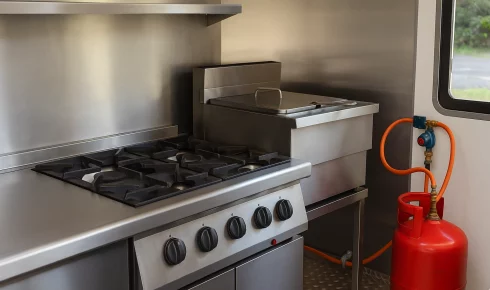
Regulations, Inspection Intervals, and Practical Implementation: Why Maintenance and Inspection of Gas Appliances Are Vital in the Mobile Food Service Industry. If you operate a food trailer or food truck, you know how […]
- General, Food Truck
Would you like to run your own food truck or food trailer? Then you probably already have lots of ideas for your culinary offerings. […]

- General, Food Truck, Food Service
Choosing the right location for your food truck is crucial to your business's success. In this article, you'll learn everything about […]
Frequently frequently asked questions
What is the difference between a food truck and a food trailer?
- in Food Truck is a self-driving vehicle with a built-in kitchen.
- A food trailer is a trailer with a kitchen that has to be pulled by a vehicle.
What are the advantages of food trailers over food trucks?
- Lower acquisition costs: Food trailers are often cheaper than food trucks.
- Flexibility: The towing vehicle can be used independently.
- Longer service life: less wear and tear as there is no separate chassis and motor.
Is it worth running a food truck?
- Yes, if you have a good business idea, an attractive location and a well thought-out marketing strategy.
- Successful food trucks can generate high profits, but require good planning and organization.
How much does a food truck or food trailer cost?
- New food truck: €50,000 - €150,000
- Used food truck: € 20,000 - € 80,000
- New food trailer: € 10,000 - € 80,000
- Used food trailer: €5,000 - €50,000
- Additional costs: insurance, permits, equipment, marketing, etc.
Are there subsidies or financing options for food trucks?
- Loans from banks (KfW start-up loan)
- Leasing or installment plan
- Subsidies for start-ups (depending on the federal state)
- Crowdfunding or investors
What permits do you need for a food truck?
- Business registration
- Food law approval (public health department)
- Stand permit from the city/municipality
- Hygiene training according to HACCP standard
- Tax registration with the tax office
What hygiene regulations apply to food trucks?
- Compliance with HACCP guidelines
- Hand basin with running water
- Separate storage of raw materials and finished dishes
- Cold chain must be maintained
- Regular cleaning and disinfection
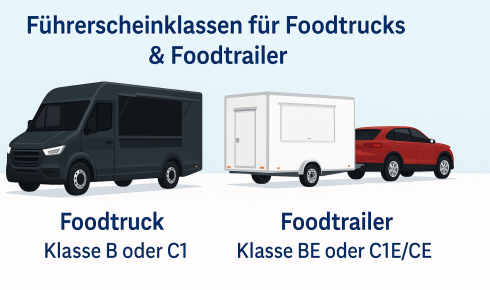
Do I need a special driver's license for a food truck or food trailer?
- Food Truck: Driving license class B (up to 3.5 t), class C1 (up to 7.5 t) or C (over 7.5 t)
- Food trailer: Depends on the total weight. Class BE is usually required for trailers over 750 kg.
Where can you stand with a food truck?
- Public parking lots or roads (with permit)
- Private areas (e.g. company premises, shopping centers)
- Markets, festivals and events (with stand permit)
Which locations are best for a food truck?
- Highly frequented places: Pedestrian zones, train stations, office districts
- Industrial areas (lunch business for workers)
- Trade fairs, festivals and events
How do you find good events or festivals for food trucks?
- Search event calendars of cities
- Request food truck festivals and street food markets
- Using Facebook groups and networks for food truck operators
What equipment does a food truck need?
- Basic equipment: gas or electric stove, fridge, sink with water connection
- Depending on the concept: deep fryer, grill, coffee machine, etc.
- Power supply: Generator or external power connection
Is it possible to have a food trailer individually equipped?
- Yes, we offer individual kitchen planning as required.
- Custom-made products are no more expensive for us, but more efficient for the company.
Which is better: gas or electric appliances in a food truck?
- Gas: independent of the power grid, cheaper to run
- Electric: Easier to handle, requires a powerful power source
How much can you earn with a food truck?
- Turnover per day: € 500 - € 3,000 (depending on location & offer)
- Profit margin: approx. 30-50
- Monthly profit: € 2,000 - € 10,000+ (if business is going well)
Which dishes sell best in a food truck?
- Burgers, fries & BBQ
- Pizza & tarte flambée
- Vegan & vegetarian dishes
- Asian street food cuisine
- Coffee & Desserts
How long does it take for a food truck to pay off?
- Usually 6 months to 2 years, depending on the investment, location and demand.
How long does it take for a food truck to pay off?
- Usually 6 months to 2 years, depending on the investment, location and demand.